
 Ingrid
 I track fares for a living. Last month I pointed the tools at my own inbox. Here’s the number, the 5-minute audit that finds yours – and how I stopped mine from growing.
By a data scientist Ingrid Solveig Halvorsen

According to industry reporting this spring, US airfares are up 20.7% year over year.
When I read that, I didn’t doubt the number. I doubted myself.
The uncomfortable part: I track fares at the aggregate level for a living. I’d never once pointed the tools at my own wallet.
So I did what I do at work: pulled every booking confirmation since 2021 – 34 flights – and compared each price I paid against the lowest fare recorded for that route around my booking window.
My average overpay was $312 – close to the $360 typical gap I later saw across 300 flagged fares this summer. Across 34 flights, that’s $10,608 in five years.
I sat with that number for a while.
The part the folk wisdom got right – and the part it didn’t
Book on Tuesdays. Clear your cookies. Every travel forum has a version of this debate.
The folk wisdom is half-right: prices really do move constantly, and timing matters. But it isn’t your cookies.
Airlines aren’t watching your browser. What’s actually happening is continuous dynamic repricing – fares shift all day, on their side, for everyone.
And the big search sites often serve averaged or cached results. Genuine drops last minutes to hours. Error fares get corrected as anomalies.
So when you search, you’re sampling a moving signal at a random moment – you land near the average.
At a few hundred dollars lost per flight, that’s roughly one extra trip a year that never happens.
Tomas ran the same audit
Tomas, a project manager I used to work with, books carefully – comparison sites, midweek searches, the usual advice.
He ran his own audit.
Five minutes: search your inbox for “booking confirmation,” list what you paid, check what that route went for around the same dates.
His six bookings showed my pattern – an overpay in the low hundreds on almost every one.
He wasn’t booking badly. He was booking blind.
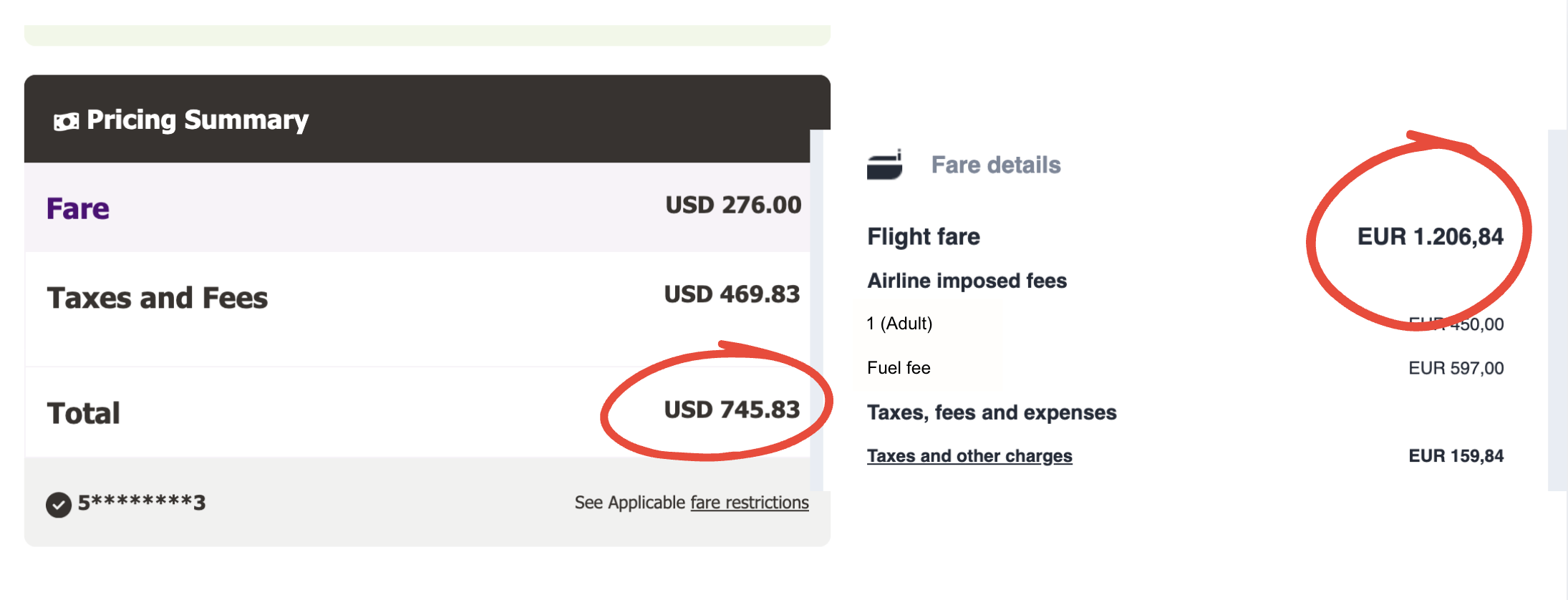
Searching was never the problem. Searching was the paradigm.
That’s when it clicked for both of us: the problem isn’t how we searched – it’s that we were searching at all. A price that moves all day can’t be caught by a person who checks twice a week.
It has to be watched.
At work, the answer to a moving signal is never “sample harder.” It’s continuous monitoring.
RatePunk is the consumer version of that.
You set your home airport, and it scans 150M fares a day, watching airfare 24/7 across airlines and booking sites.
Every fare gets an AI Deal Score from 0 to 100 – based on price history, savings, route distance and timing – and only fares that clear an 80+ Deal Score reach you.
I set it up the way I’d set up any test.
Three weeks in, an alert pinged on my phone for a route I’d overpaid on twice: Los Angeles to Madrid, $177 round trip – a fare that usually runs $698. Deal Score: 99.
The screenshot below is the receipt – third card down, with the rest of that day’s list.
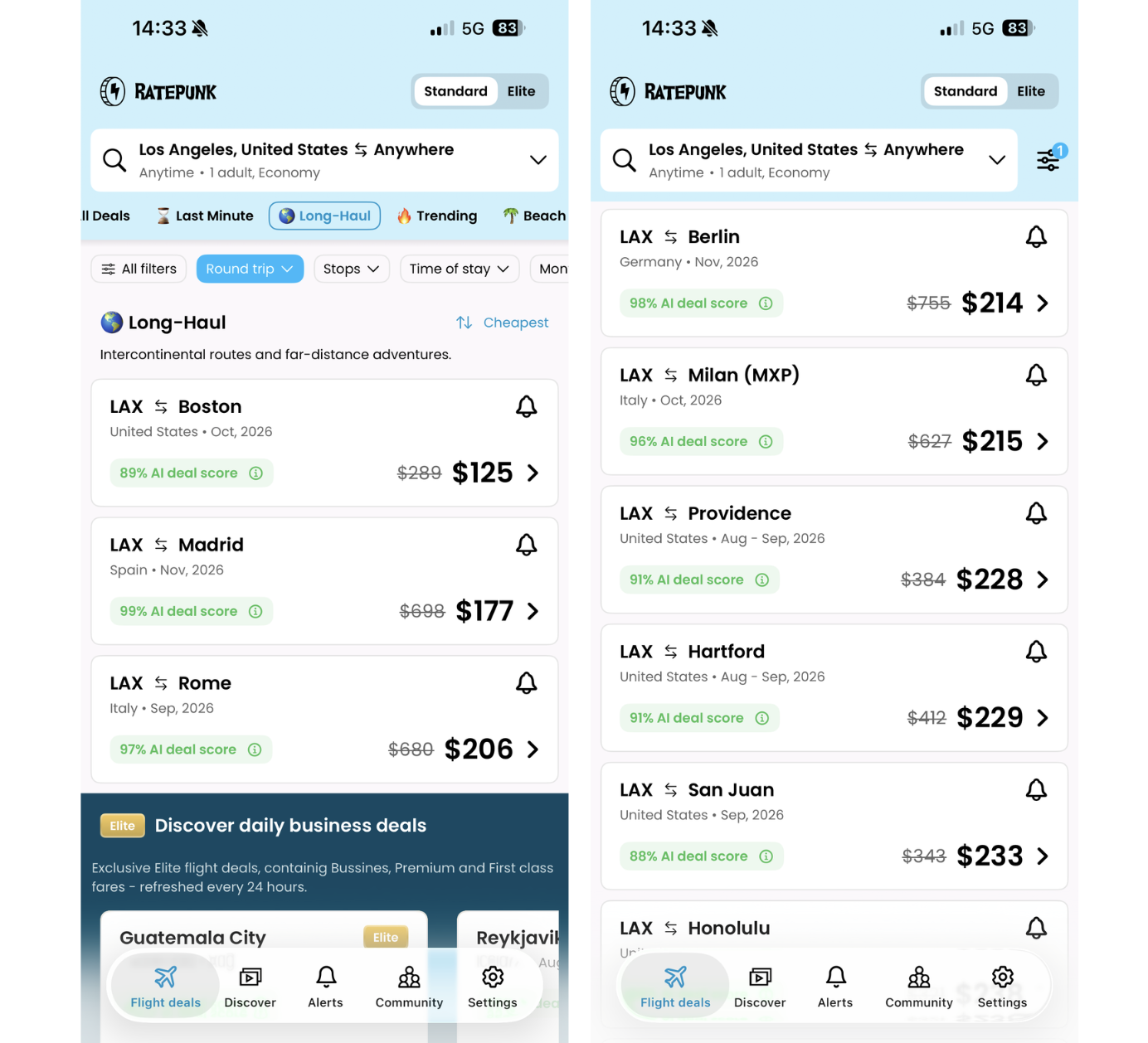
One alert, $521 below the usual fare – bigger than my $312 average, the overpay I’d spent five years measuring, running in reverse.
The numbers: 300,000+ members. 4.7 stars on the iOS App Store, 4.6 on Google Play. And a filter that discards everything below an 80+ score (out of 100) before it ever reaches your inbox.
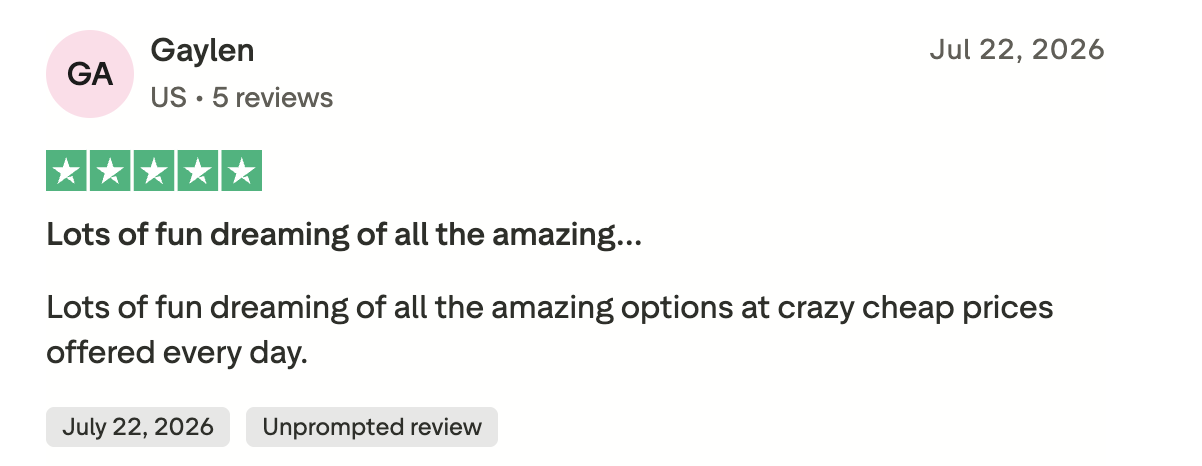
Other fares members caught:
→ Chicago to London: $50 round trip, usually $693
→ New York to Lisbon: $170 round trip, usually $548
→ Houston to Madrid: $173 round trip, usually $691
→ New York to London: $275 round trip, usually $898
The first one is a 93% drop – that is where “up to 90%” comes from, not from a promise.
Run your audit, then stop the bleed
Five minutes, no spreadsheet needed. Search your inbox for “booking confirmation”, list what you paid, and check what that route went for around the same dates.
If the gap is in the hundreds on most of them, you’re where I was. The fix takes about a minute longer than the audit.
Set your home airport once, and RatePunk watches it around the clock – 150 million fares a day, every one scored 0 to 100.
Only fares rated 80 or higher reach your phone, with the route, the dates, the price and a link to the booking page.
It isn’t a booking site – you book with the airline or booking site yourself, which is also how you know it’s legitimate.
Will it work from your city? You choose the airport, and the flexible modes cover routes beyond it.
Too good to be true? Most fares never clear 80, so what reaches you is the exception – savings of up to 90%, like Chicago to London at $50, when the data says so and not before.
If a fare clears 80 for your airport, you’ll see what I saw. If nothing does, you’ve spent a minute.
Tomas set his up the same week.
| IMPORTANT NOTE: Since this article was published, RatePunk has seen a surge of sign-ups. As a courtesy, readers here can still join with 77% off. |
Sources: Simple Flying • AltexSoft • AltexSoft (fare buckets) • Thrifty Traveler • Going • Mighty Travels • Deal figures: RatePunk app screenshots, 30 July and 2 September 2026; savings gap from 300 economy fares rated 80+, 30 July-7 September 2026; the author’s and Tomas’s own booking confirmations.


