
 Victoria
 “I spent 12 years deciding what you’d pay for that seat – the price was never about the seat.” – Daniel Robertson, former airline pricing manager, with over 12 years of experience.

When I first saw the number, I didn’t quite believe it.
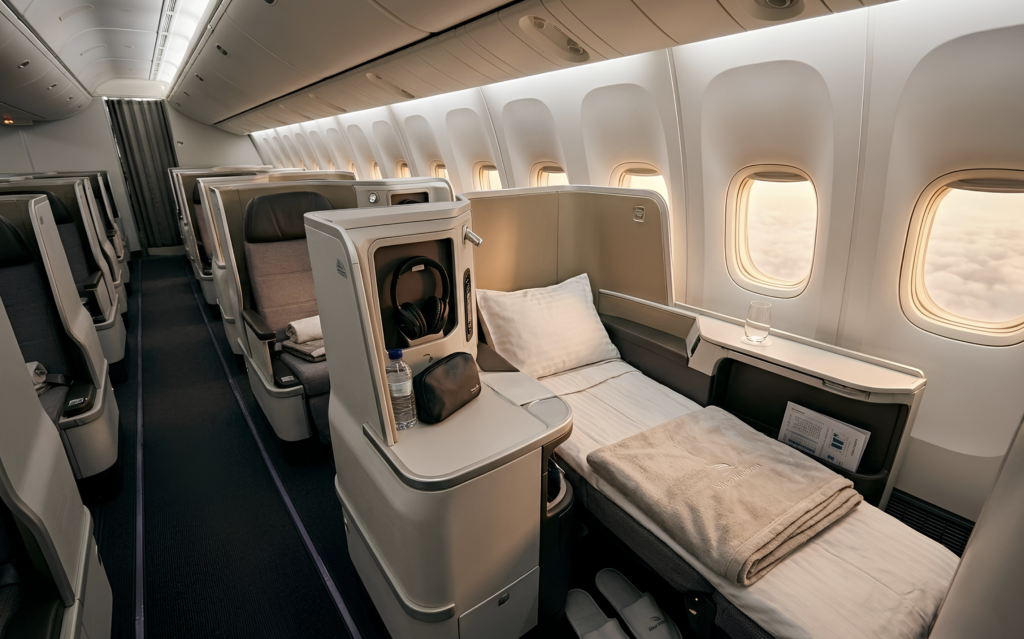
This May, identical Emirates A380 business class seats were documented selling for anywhere between $2,500 and $10,000, according to recent industry data. Same cabin. Same flight. Same champagne.
A swing that big sounded like a glitch. So I asked someone who used to set those prices for a living.
Daniel Robertson spent 12 years as an airline pricing manager. When I showed him the numbers, he barely blinked.
“I wasn’t surprised,” he told me. “For 12 years, I helped build the system that makes that swing possible.”
Why the price you see was chosen for you
Every flight, he explained, is carved into dozens of invisible fare buckets – micro-classes, each with its own price and inventory lever.
“The system reads demand in real time,” Daniel said. “Search volume, booking velocity, how far out you’re shopping. It estimates what you’ll pay, then decides which bucket you see.”
And when demand jumped? “We closed the cheap buckets in minutes. In my experience, a genuinely low business fare survived 60 to 90 minutes before the system repriced.”
The myth that costs you most
Most of us believe good fares reward effort – hours of searching, incognito tabs, Tuesday-at-2am folklore. Daniel says that’s backwards.
“I watched it every day. Effort doesn’t matter – timing does,” he told me. “No human can watch fares in 90-minute windows, all day long.”
What this actually costs you
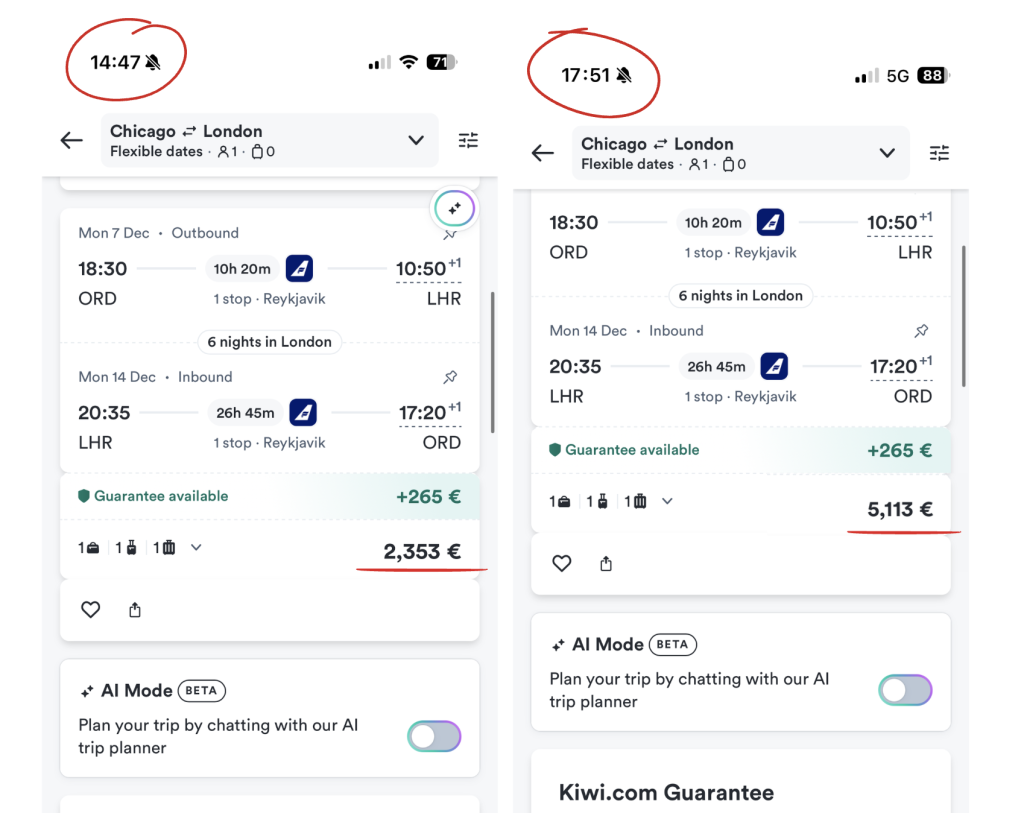
Think about that for a second. Two people board the same flight, sit in the same seat – and one paid $7,500 more.
It happens on ordinary routes too, just smaller. Book at the wrong moment and you quietly hand over an extra $200 to $400 for every flight.
If you fly long-haul twice a year, that adds up to a real choice: lie flat both trips, or fly coach once and tell yourself business class “isn’t worth it.”
It’s worth it. You were just never shown the cheaper price.
Daniel’s friend Paul thought he knew every trick
Daniel told me about his friend Paul – a 52-year-old consultant who flies long-haul twice a year. Flexible dates, comparison sites, a points card; he’d mastered the whole toolkit.
Paul checked business class to London three weekends in a row. Each time, the price was a little higher. Finally he gave up and booked, at a number that stung.
Then a coworker mentioned getting the same seat for half that, just a few weeks before.
Paul searched harder than most people ever will. He was just never looking during the window. And in reality, nobody is.
The problem isn’t how hard you search
That, Daniel says, is the whole problem.
“Finding the deal was never the hard part. Being awake the 90 minutes it exists – that’s the part no person can win,” he told me. “If I were still booking my own flights, I’d want something watching the fares for me.”
That something is RatePunk, a flight deal app that monitors airfare from your home airport 24/7.
Its AI Deal Score rates every fare 0-100 on price history, savings, route distance and timing – and only fares scoring 80 or more reach you. Deals are also picked for fewer layovers and better timing.
It does the staring. You get the window.
What one of these alerts looks like
You set your home airport once, and the watching starts. When a fare crosses 80, it lands in your dashboard with four things and nothing else:
• The route — a flight leaving from your airport
• The dates — the exact days the low fare is live
• The price — the fare, and what it typically costs
• The link — a button to book it before the bucket closes
You don’t search. You don’t refresh. The job that used to take three weekends happens while you’re doing something else.
What members are actually seeing
The premium cabins are where the swings – and the catches – are biggest:
→ Houston to Memphis, First Class on United: $337 round trip, typically $727 (rated 95/100)
→ London to Paris in Premium Economy: $292 round trip, typically $580 (rated 95/100)
→ London to Los Angeles: typically $1,011 — flagged at $286 (rated 97/100)
That last one is an ordinary economy route. The mechanism is the same in every cabin: a bucket opens, briefly, and the question is only whether anything was watching when it did.
What happened to Paul
There’s a footnote to Paul’s story. After that painful booking, Daniel sent him the app.
Six weeks later, Paul forwarded me a screenshot. It was an alert for the same London route he’d hunted for weeks – business class, $2,640 round trip. Deal Score: 88.
“I’d been one click from paying $8,400,” he wrote. “This time I didn’t search at all. It just showed up while I was making coffee.”
Same route. Same cabin. Roughly a quarter of the price – and zero effort. That’s the difference between hunting the window and having something watch it for you.
The honest objections
Legit? Over 300,000 members, with 4.7 and 4.6 stars across the two app stores. You set your own home airport, so the scanning happens from where you actually fly.
And the honest limitation: this is a shortcut, not a pill. If your dates and destination are locked to the day, no tool can conjure a cheap bucket on demand. Where it wins is everywhere you have even a little flexibility – which, for most trips, is more room than people think.
One note on timing, from the man who built these systems: “When demand signals fire, the cheap buckets close – often within 60 to 90 minutes. An 80-scored fare you can see right now is simply one the system hasn’t corrected yet. That’s not marketing urgency. That’s how my old job worked.”
| IMPORTANT NOTE: Since this article was published, RatePunk has seen a surge of sign-ups. As a courtesy, readers here can still join with 77% off. |
Stop searching harder
• Set your home airport once
• Let the algorithm watch fares 24/7
• Only see fares the AI Deal Score rates over 80
• Get the alert with a direct booking link
Setup takes under a minute. If a deal lands, you’ll see the bucket Daniel spent 12 years closing. If it doesn’t, you’ve spent a minute.


